
Core principles
We aim for reliable, repeatable bloom quality. Key levers: correct harvest stage, clean hydraulic flow (recutting), controlled temperature/humidity, gentle handling and protective shipping that prevents bud drying.
- Stage balance: ship close enough to opening for quality yet protected for transit.
- Hydration & hygiene: recut under water and use preservative to maintain uptake and limit microbes.
- Temperature control: warm rooms to accelerate, cool-hold to slow opening.
- Humidity & spacing: keep heads from rubbing; use humidity to protect petals.
- Packing: we ship bundles packed into large plastic shipping bags (not sleeved per bunch, not boxed). Moist paper is wrapped at bag ends to maintain humidity and protect buds; bags are palletized/handled for freight and cube is used for freight calculations.
Receiving — quick checklist
- Accept delivery upright: move cartons upright to a cool, sheltered area before opening.
- Unpack upright: remove cartons carefully; keep stems vertical while handling.
- Recut stems under water: 1–2" at an angle to restore vascular flow.
- Hydrate: place stems in clean buckets of cool water with a commercial floral preservative.
- Space stems: allow heads to hang/spread so they do not rub while hydrating; give double forms extra room.
- Plan temperature: decide warm-room finishing or cool holding based on event timing.
Recutting and proper hydration immediately after unpacking are the most important steps to ensure successful opening.
Staging — warm vs. cool
Warm-room finishing (speed up)
- Target 65–75°F to accelerate opening; use only in the final days before event.
- Warm up gently: 12–24 hours at ~50–60°F before full warm-room exposure to avoid shock.
- Maintain 60–85% RH — higher humidity for double forms & magnolia.
- Avoid strong drafts or direct sun.
Cool dark holding (slow opening)
- Target 34–40°F to slow physiological processes and extend hold.
- Use stable refrigeration/insulated coolers; avoid freezing.
- Hold times commonly range 7–21+ days based on starting stage.
- Transfer gradually to warm-room to reduce shock.
For critical events, stage a small sample and validate your days-to-open at your receiving temp before scheduling the full lot.
Per-product staging guidance (approximate)
Warm-room days below are conservative planning values. Test a sample when exact timing is required.
| Product | Common ship stage | Warm-room days (65–75°F) | Notes |
|---|---|---|---|
| Forsythia | Swollen bud / color visible | 3–7 days | Rapid opener; keep humidity high. |
| Quince (single) | Swollen bud | 5–10 days | Short stems; double quince slightly slower. |
| Double Quince | Tighter bud | 5–12 days | Generous spacing & hydration required. |
| Pussy Willow | Tight catkin | 2–5 days | Hardy; avoid overdrying. |
| Tulip Magnolia | Tight bud / color visible | 3–7 days | Large blooms need wide buckets/support. |
| Cherry / Prunus | Plump bud / showing color | 5–10 days | Warm-up gradually to avoid shock. |
Workflow tip: plan your warm-room transition by counting back warm-room days from the event date and adding a 24–48 hour buffer.
Conditioning, water & preservatives
- Sanitize buckets with mild cleaner and rinse.
- Use cool, clean water and change it daily for long holds.
- Recut stems 1–2" at an angle under water; for woody stems, recut again after 24 hrs.
- Use a commercial floral preservative (sugar + acidifier + biocide) per directions.
- Do not use untested household additives.
Grooming — short, practical guidance
Grooming is the brief removal of a small percentage of damaged or spent buds to protect the remaining stems. This is a normal trade practice and helps prevent minor issues from becoming bigger problems.
- Remove only damaged blooms with sanitized shears.
- Trim ragged stems so bunches present cleanly.
- Dispose trimmed material away from working buckets to avoid contamination.
A quick 1–3 minute groom on a few stems during receiving substantially reduces handling problems and protects the overall presentation.
Packing & shipping — our method (bags only)
We pack multiple bundles into large plastic shipping bags that hold several bundles. The open ends of each bag are wrapped with moist paper to preserve localized humidity and protect buds during transit. These bags are shipped directly (not boxed); for freight, bags are palletized or consolidated and cube-based freight calculations are used.
- Large plastic bags: form a humid microclimate around buds and protect heads from drying.
- Moist paper at bag ends: keeps moisture near the buds during shipment.
- Shipping handling: bags are palletized or otherwise secured for transport; carriers handle and freight is calculated by cube.
- Hot/cold weather: use insulated liners for hot weather or plan shipping to avoid freezing conditions.
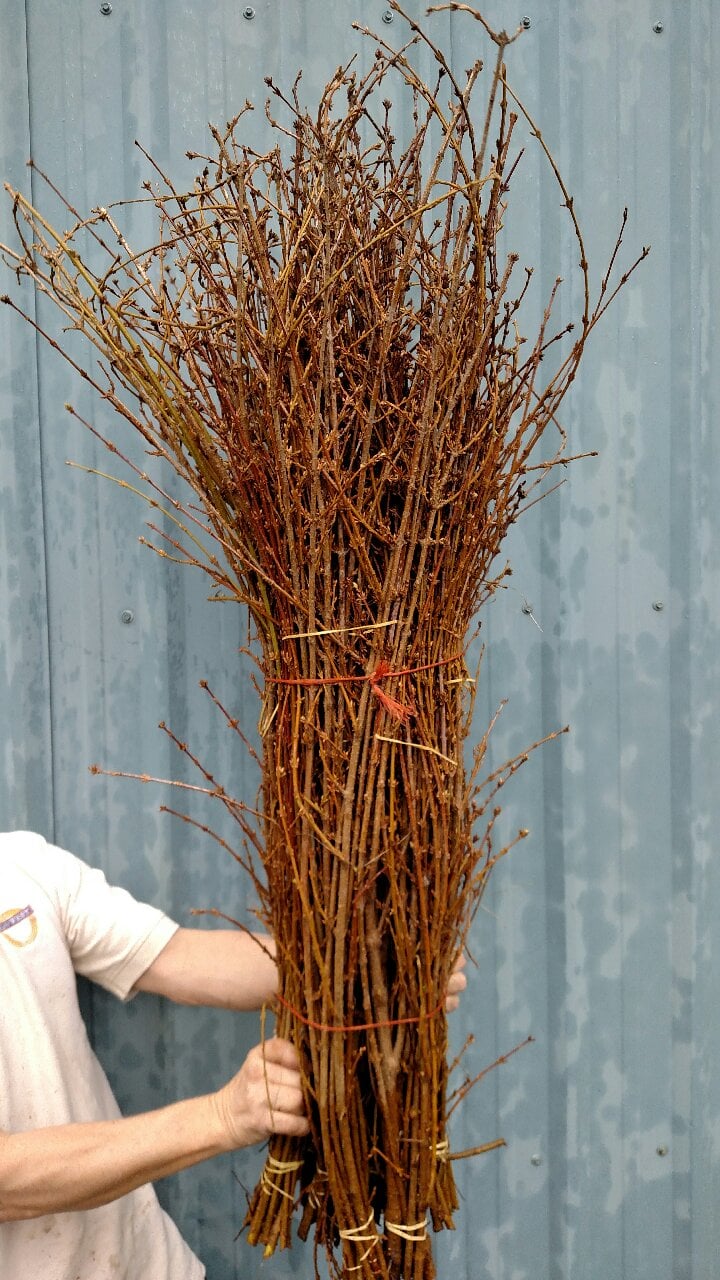
Example: bundles packed in large shipping bags with moist paper ends to retain humidity and protect buds; bags ship directly and are palletized for freight.
Troubleshooting — common issues & practical fixes
Slow opening
Cause: tight buds or blocked xylem. Fix: recut under water, warm-room finishing, fresh preservative and gentle airflow.
Brown or black buds
Cause: freezing or heat shock. Fix: remove affected buds (groom) and salvage remainder; contact sales if widespread.
Rubbing / bruising
Cause: movement/overcrowding. Fix: separate stems, rehydrate and add support for large heads.
Cloudy water
Cause: bacterial growth. Fix: change water, sanitize buckets, recut stems, add fresh preservative. Consider a water-line biocide for repeated issues.